Categories

What is UV curing?

UV curing is a fast, eco-friendly photochemical process that uses ultraviolet (UV) light to instantly dry, harden, or cure inks, coatings, adhesives, and resins.
May 10th,2026 25 Views

What Is UV Curing?

Ultraviolet (UV) light is a form of electromagnetic radiation with wavelengths ranging from 10 nm to 400 nm—shorter than visible light but longer than X-rays. Invisible to the human eye, UV light carries high photon energy, giving it unique photochemical and physical properties that make it indispensable across industrial, medical, environmental, and manufacturing sectors.
UV radiation is divided into four distinct wavelength bands, each with unique characteristics and applications:

1.UVA (315–400 nm)
The longest UV wavelength band, with strong penetration ability. It is widely used in UV curing, non-destructive testing, and blacklight detection, and is the core band for industrial UV curing systems.

2.UVB (280–315 nm)
Medium-wavelength UV, mostly absorbed by the Earth’s atmosphere. It is applied in medical phototherapy, material aging testing, and partial disinfection scenarios.

3.UVC (200–280 nm)
Short-wavelength germicidal UV, with strong microbial inactivation ability. It can destroy the DNA/RNA structure of bacteria, viruses, and other microorganisms, making it the core band for water, air, and surface disinfection.

4.Vacuum UV (10–200 nm)
Extremely short-wavelength UV, easily absorbed by air and water, only transmissible in a vacuum. It is used in advanced semiconductor lithography and high-precision material processing.


Working principle of ultraviolet radiation

UV curing is a fast, eco-friendly photochemical process that uses ultraviolet (UV) light to instantly dry, harden, or cure inks, coatings, adhesives, and resins.
Unlike traditional air-drying or heat drying, UV curing requires no high temperature and finishes curing within seconds when exposed to specific UV wavelength light. The liquid material undergoes an immediate cross-linking reaction under UV irradiation and turns into a solid film instantly.

The Process:
  1. Exposure: The liquid material is exposed to high-intensity UV light (often 365nm-395nm waves).

  2. Activation: The Photoinitiators absorb this UV energy and break apart, creating highly reactive molecules called free radicals.

  3. Reaction: These free radicals instantly attack the binders (monomers/oligomers), causing them to link together (crosslink) into a solid polymer chain.

    Comparison between UV LED and traditional mercury lamps

    Feature Traditional Mercury Arc Modern UV LED
    Heat Output High (Infrared emission) Low (Cold Cure) – Safe for heat-sensitive film/electronics
    Lifespan 1,000 – 2,000 hours 20,000+ hours
    Environment Contains toxic mercury Produces Ozone Mercury-free; No ozone; 50% less energy
    Start/Stop Need preheating Instant on/off


    Core Advantages of UV Curing

    • Extremely fast curing – Completes curing in 0.1–5 seconds, significantly increasing production efficiency.

    • Eco-friendly – 100% solids content with zero VOC emissions and no solvent evaporation.

    • Cold process – Generates virtually no heat, suitable for heat-sensitive substrates such as films, plastics, and electronic components.

    • Excellent performance – After curing, it provides high hardness, scratch resistance, chemical resistance, outstanding gloss, and strong adhesion.

    • Energy saving & cost reduction – UV LED consumes about 50% less energy than mercury lamps, lasts over 20,000 hours, and requires compact equipment with a small footprint.
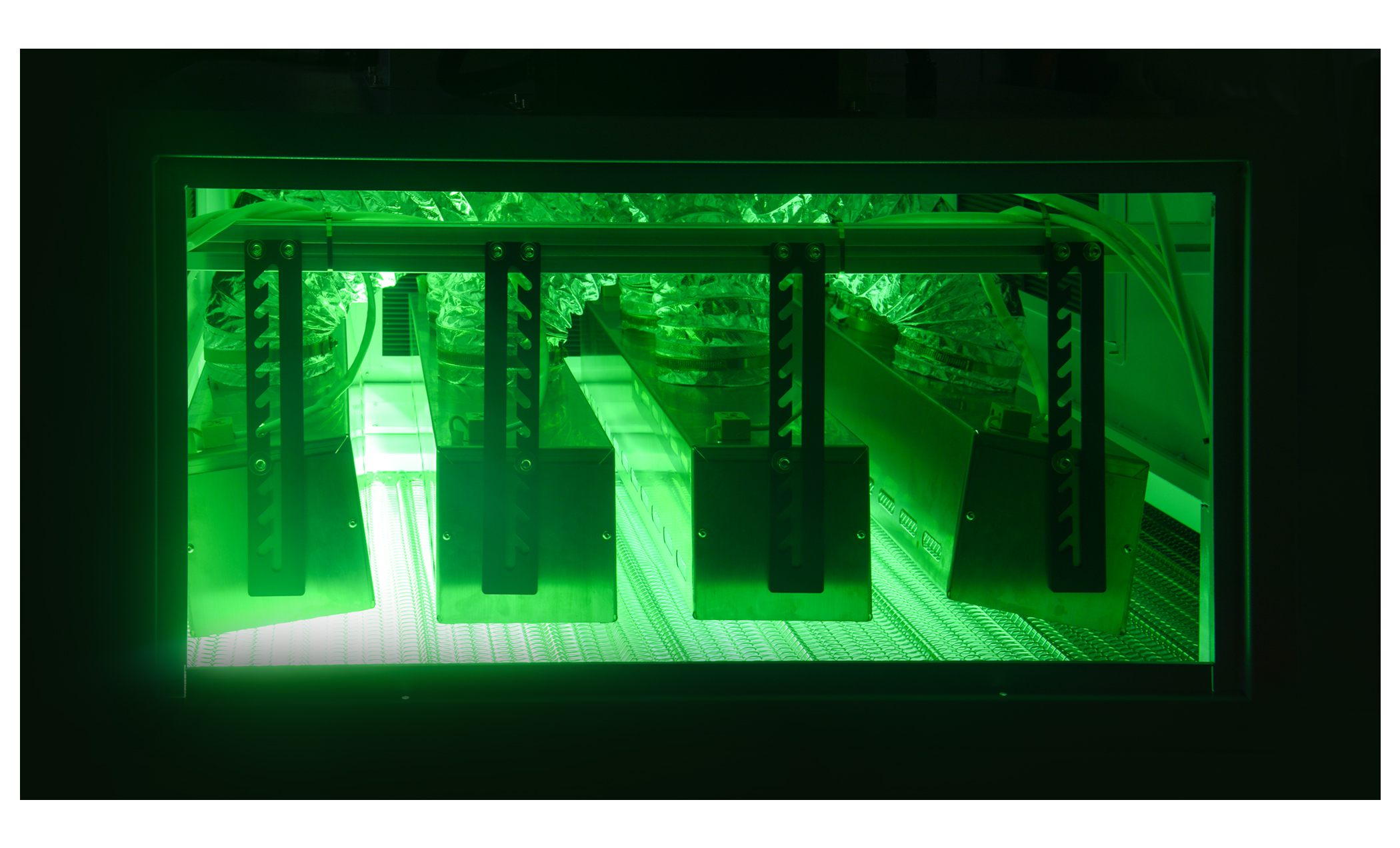
      Where is UV Curing Used

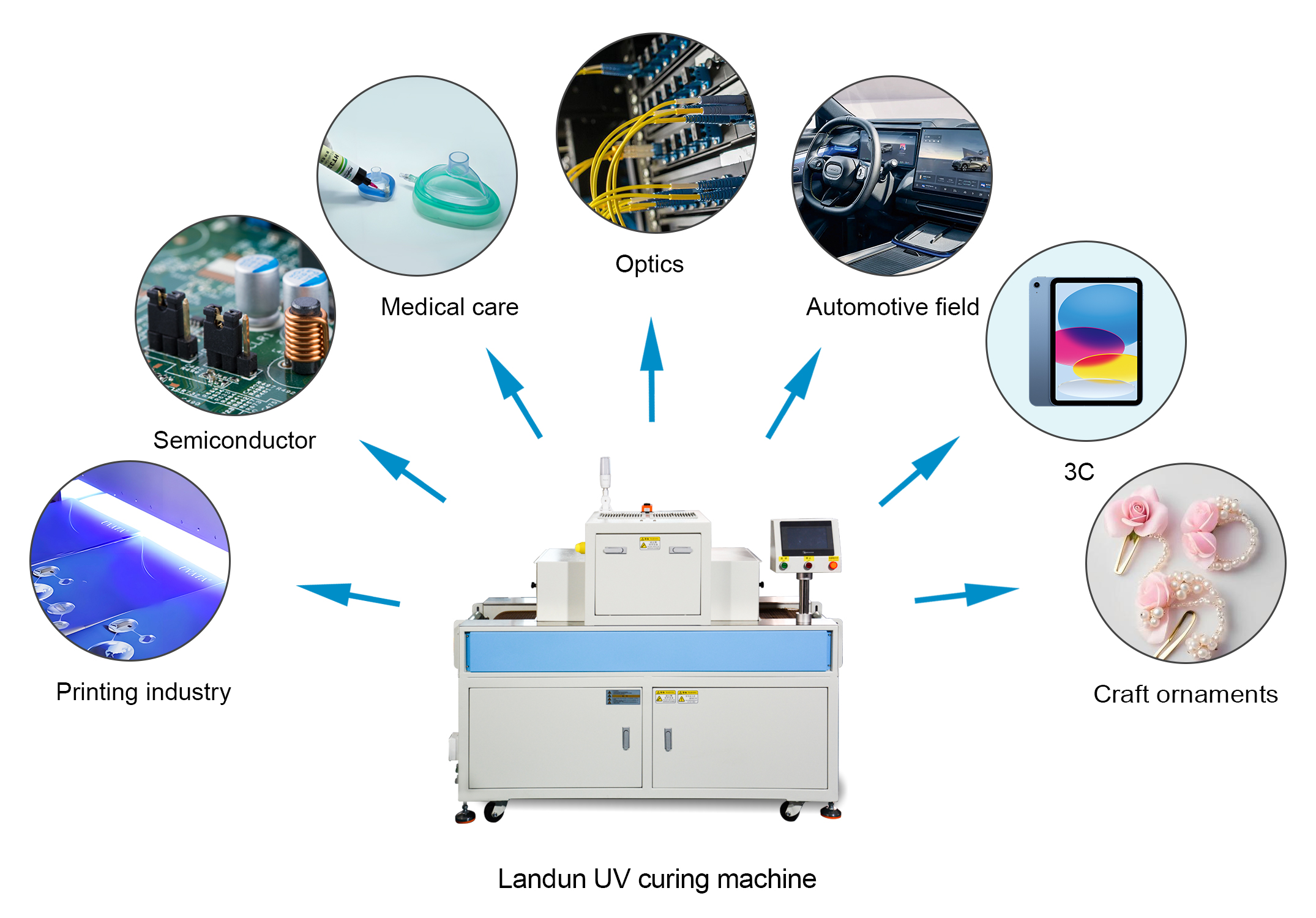
      1. Printing Industry – Instant drying of inks on magazines, labels, and packaging boxes, delivering vibrant colors without spray powder.

      2. Electronics Industry – Screen lamination, camera module fixing, and circuit board protection with fast bonding and secure adhesion.

      3. Medical Devices & Optics – Sealing and bonding of catheters and syringes, plus coating protection for optical lenses and optical fibers.

      4. 3D Printing – Layer-by-layer curing of liquid resin to produce dental molds, jewelry, and high-precision models.

      5. Automotive Manufacturing – Headlamp bonding, interior panel lamination, wire harness fixation, and window glass sealing.

      6. Coatings & Adhesives – High-hardness, scratch-resistant coatings on wood, plastic, glass, and metal surfaces, plus fast bonding of transparent materials.

      7. Other Specialized Industries – Optical fiber coating, lithium battery separator coating, jewelry doming, and UV pressure-sensitive adhesive tapes.

      About Landun Electromechanical

      Landun Electromechanical has long been dedicated to the application of high-performance UV curing technology.With solid technical experience and professional strength, we provide customized, high-efficiency and high-stability complete UV system solutions for customers across all industries.We empower industrial manufacturing with reliable technology and promote the high-quality development of the green environmental protection industry.