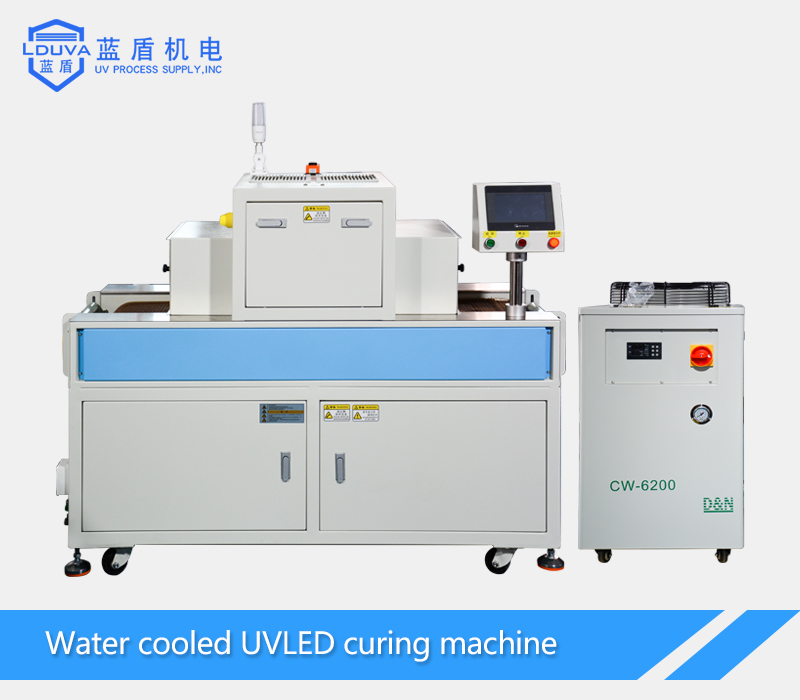
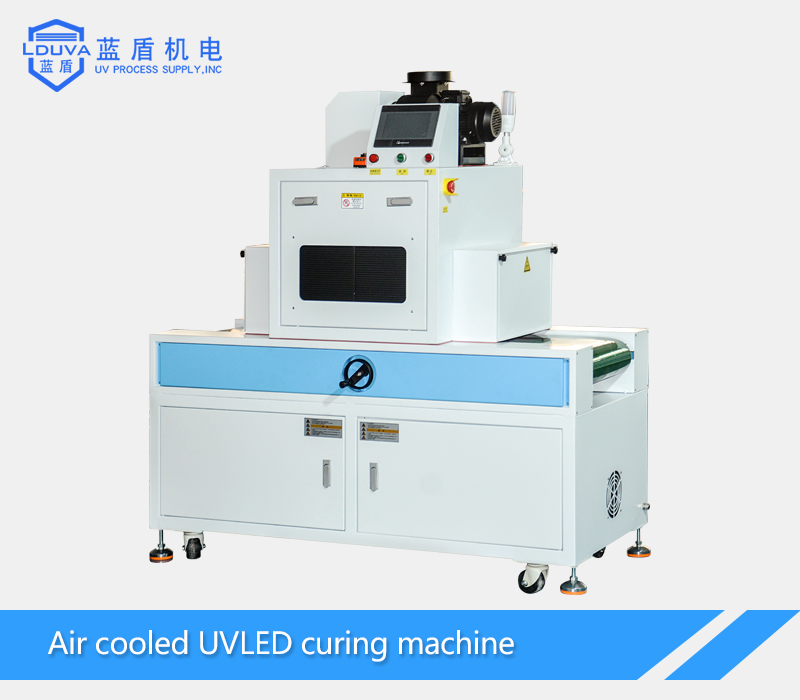
In the world of industrial printing, coating, and converting, UV curing is the gold standard for instantly drying inks and coatings. However, whether you are using traditional Mercury Arc lamps or modern UV LED systems, heat is the inevitable enemy.
Effective thermal management is not just about keeping the machine running; it is about protecting your substrates, extending the life of your lamps, and ensuring consistent output quality.
When choosing a UV system, one of the most critical decisions is the cooling method: Air-Cooled or Water-Cooled. Both have distinct engineering advantages and limitations depending on your operational environment.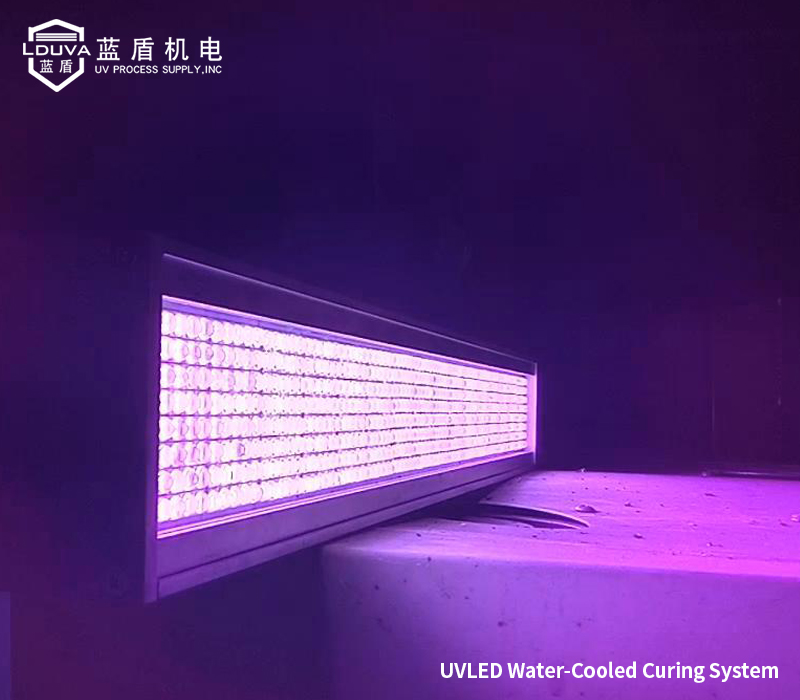
1. What is Air-Cooling in UV Curing?
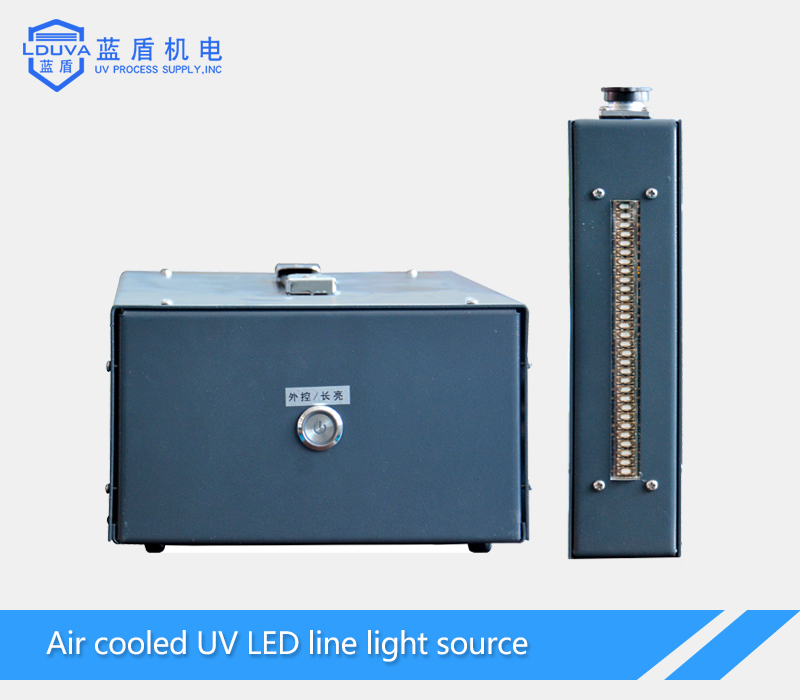
Air-cooled systems use fans to push ambient air across heat sinks attached to the UV lamp head. The heat sink absorbs thermal energy, and the fan dissipates it into the surrounding atmosphere.
Advantages
Simple structure with low purchase and usage cost.
Easy daily maintenance, only dust cleaning required.
Compact size, flexible installation and movement.
Disadvantages
Average heat dissipation, performance drops in high temperature.
Unstable temperature control effect.
Generates noise and vibration during operation.
2. What is Water-Cooling in UV Curing?
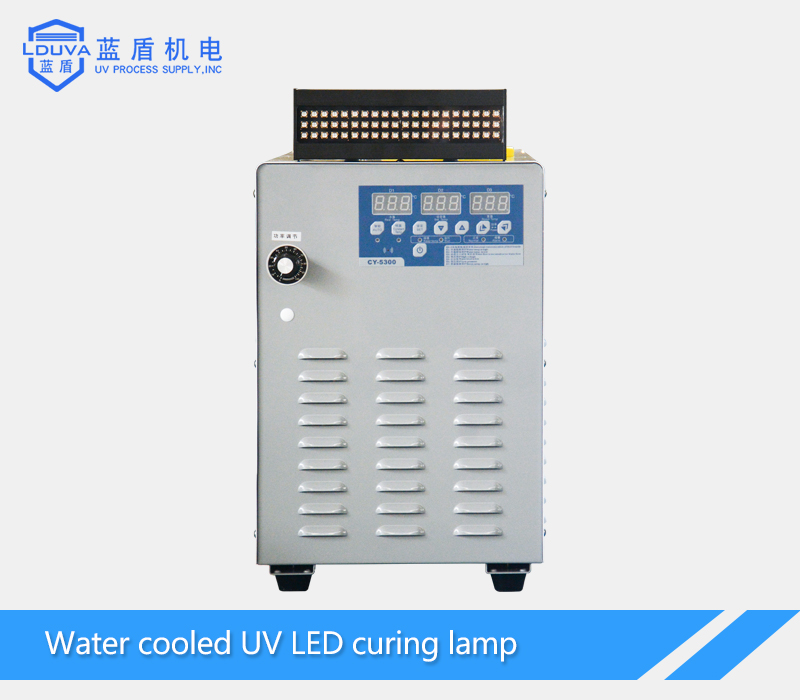
Water-cooled systems circulate chilled liquid (water or coolant) through a closed loop that runs directly through a cooling plate or block in the lamp head. The liquid carries heat away to a remote chiller unit where it is expelled.
Advantages
Powerful heat dissipation and precise temperature control.
Low noise and vibration during operation.
Supports long-term high-power continuous work.
Disadvantages
Higher overall equipment cost.
Regular maintenance with complex procedures.
Bulky size, limited layout flexibility.
3. Air-Cooled vs. Water-Cooled: Quick Comparison
| Feature | Air-Cooled UV Systems | Water-Cooled UV Systems |
|---|---|---|
| Cooling Medium | Ambient air | Chilled water/glycol mixture |
| Efficiency | Moderate (50–70°C operating temp) | High (25–35°C operating temp) |
| Cost | Low (simple components) | High (chiller + piping required) |
| Maintenance | Minimal (dust cleaning only) | Regular (coolant replacement, leak checks) |
| Noise | Noticeable (fan noise) | Quiet (no high-speed fans) |
| Best For | Small-batch, intermittent, low-power applications | High-power, continuous, heat-sensitive applications |
Choose Air-Cooling If:
You run small-batch, intermittent production (≤8 hours/day).
Your application is low-power (≤200W) and not heat-sensitive (e.g., coding, basic printing).
You need flexible installation or mobile operation.
You have a limited budget for equipment and maintenance.
Choose Water-Cooling If:
You operate high-speed, wide-format, or high-power production lines.
Your substrates are heat-sensitive (e.g., thin films, electronics, medical materials).
You require 24/7 continuous operation with stable UV output.
You prioritize long lamp life and consistent curing quality.
When in doubt, consider your future needs. A water-cooled system represents a higher upfront investment but offers the scalability and thermal headroom required for the most demanding industrial applications.
5.Why Choose LANDUN UV Curing Systems?
we deliver reliable, high‑performance UV olutions for global clients:
Dual cooling options: Custom air‑cooled or water‑cooled systems for mercury lamps and UV LEDs (365–405 nm).
Consistent quality: Precise temperature control ensures stable UV output, extending service life up to 20,000–40,000 hours.
Energy efficiency: Low power consumption (30% of traditional mercury lamps); instant on/off with no warm‑up needed.
Full support: 500‑day warranty, 24/7 technical service, and CE certification.
Contact LANDUN today to find the perfect UV curing solution for your application!